If your eye doctor has recommended OptiLight IPL and you are not sure what to expect, you are not alone. IPL sounds clinical and unfamiliar, and it can be hard to know whether you are making the right decision before you have done it. At Toluca Lake Optometric Center in Burbank, CA, we walk every patient through the process before their first session — because understanding what is actually happening makes the treatment more comfortable and the results easier to appreciate.
Here is an honest, detailed look at what the OptiLight experience is actually like from consultation through results.
Why OptiLight and Not Standard IPL?
OptiLight is the IPL platform developed by Lumenis specifically for the treatment of dry eye disease caused by meibomian gland dysfunction. It received FDA clearance for this indication — making it the only IPL device with that designation.
The distinction matters. Consumer and cosmetic IPL devices vary widely in consistency and clinical evidence. OptiLight uses Lumenis's Optimal Pulse Technology (OPT), which delivers square-wave, reproducible light pulses that are calibrated precisely for periocular tissue. The treatment targets the root inflammatory drivers of MGD rather than just the surface symptoms.
Before Your First Session: The Consultation
Every OptiLight treatment at Toluca Lake Optometric Center begins with a comprehensive dry eye evaluation. This is not a formality — it is how we confirm that IPL is the right treatment for your specific presentation.
During the evaluation, we assess:
- Tear film stability and breakup time
- Meibomian gland structure using infrared meibography
- Eyelid health and lid margin condition
- Tear production volume
- Inflammatory indicators on the ocular surface
This gives us a clear picture of what is driving your dry eye and what your glands look like before treatment begins. We also review your skin type, medications, and any history of photosensitivity, since IPL is not recommended for patients with certain skin tones or active inflammatory skin conditions.
If OptiLight is appropriate for you, we schedule your first session and provide specific pre-treatment instructions — most commonly, avoiding direct sun exposure on the treatment area for at least two weeks beforehand and stopping retinoid products a few days prior.
The Day of Treatment: What Happens Step by Step
OptiLight sessions are performed in the office and take approximately 10 to 15 minutes from start to finish.
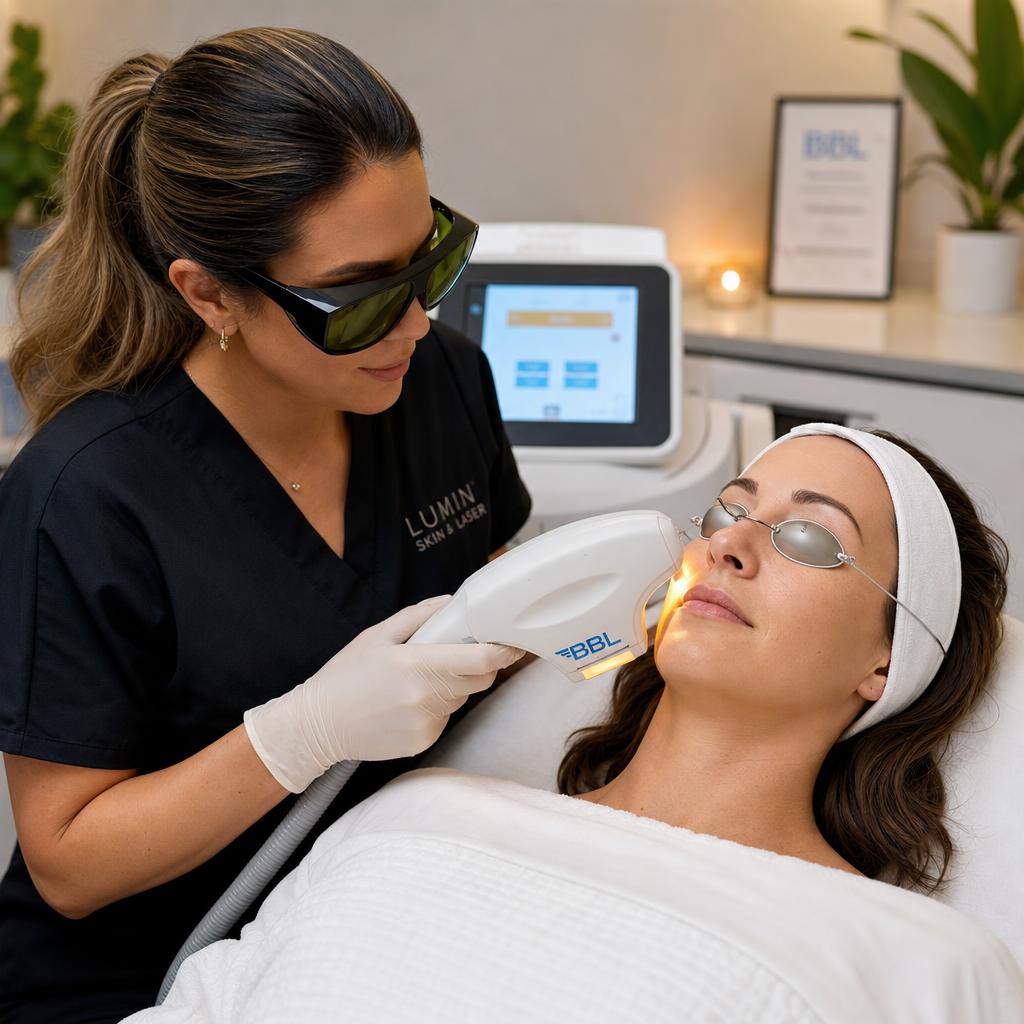
Preparation: You will recline comfortably in the treatment chair. A thin layer of cooling gel is applied to the skin across your cheeks and the area below your eyes. This improves light contact and enhances comfort during the pulses.
Eye protection: Opaque shields are placed directly over your eyes to fully protect them from the light. These stay in place throughout the treatment.
Treatment: The handpiece delivers a series of carefully controlled light pulses across the cheeks and lower periocular area. The sensation is commonly described as a brief, warm snap — similar to a mild rubber band flick. Most patients find it very tolerable. There is no anesthesia needed.
The light targets hemoglobin in the abnormal, dilated blood vessels around the eyelid margins. Those vessels are the primary carriers of inflammatory mediators that disrupt the meibomian glands. The treatment also generates controlled warmth that penetrates into the lid tissue, helping to soften the waxy, thickened secretions that clog the glands.
Gland expression: After the light pulses, your doctor will perform meibomian gland expression — a gentle, manual technique that clears the softened secretions from the glands so they can resume proper function. This is often where patients feel the most immediate relief.
Post-treatment: The gel is wiped away. Skin may appear slightly pink, similar to mild sun exposure. That typically resolves within a few hours. You can return to normal activities immediately — there is no downtime.
How Many Sessions Do You Need?
Most patients complete an initial series of three to four sessions, typically spaced three to four weeks apart. The first session begins the process; subsequent sessions build on the progress. The glands need time between treatments to respond, clear, and stabilize.
Many patients notice meaningful improvement in comfort, tear stability, and eye redness over the course of their initial series. Some respond more quickly than others — people with earlier-stage MGD and less gland atrophy tend to respond the fastest.
After the initial series, most patients maintain their results with a single follow-up session every six to twelve months. The timing depends on how your glands respond and how quickly your underlying inflammatory drivers return.
What Results Feel and Look Like
Changes from OptiLight tend to be cumulative rather than immediate after a single session. Over the weeks following your series, most patients notice:
- Reduced burning and gritty sensation
- Less dependence on artificial tears
- Clearer, more stable vision throughout the day
- Reduced eyelid redness and inflammation
- Improved morning comfort
- Clearer skin tone around the treatment area
Because IPL treats the underlying dysfunction rather than masking symptoms, the improvements last substantially longer than drops or warm compresses.
Getting Started with OptiLight in Burbank
If you have been managing dry eye with limited relief, or if you have never had a thorough evaluation of your meibomian gland health, we would like to help.
Call Toluca Lake Optometric Center at (818) 841-1212 to schedule your dry eye consultation and find out whether OptiLight is right for you.