Myopia, commonly known as nearsightedness, is rising at a remarkable rate among children worldwide. For many families, it feels like a simple problem with a simple fix - a pair of glasses and clearer vision. But myopia is more than a prescription. It is a progressive condition that tends to worsen throughout childhood, and the level it reaches by adulthood carries real consequences for long-term eye health. At Toluca Lake Optometric Center in Burbank, CA, we focus on myopia management: not just correcting blurry vision, but actively slowing its progression while a child's eyes are still developing.
What Is Myopia?
Myopia occurs when the eye grows too long from front to back, or when the cornea is too steeply curved. As a result, light focuses in front of the retina instead of directly on it, making distant objects appear blurry while near objects stay clear.
In children, the signs often show up at school or at home. A child may squint to see the board, sit very close to the television, hold devices close to their face, rub their eyes frequently, or complain of headaches. Because children rarely realize their vision is not normal, these habits are sometimes the first clue parents notice.
Why Catching Myopia Young Matters
Here is the key idea behind modern myopia care: myopia is progressive, and it progresses fastest in childhood. The younger a child is when myopia begins, the more time it has to advance - and the higher the final prescription tends to become.
This matters because high myopia is not just a strong prescription. It is associated with a significantly increased lifetime risk of serious eye conditions, including:
-
Retinal detachment
-
Glaucoma
-
Early cataracts
-
Myopic maculopathy, a degenerative change in the central retina
These risks are tied to how elongated the eye becomes. That is why slowing progression during the childhood years is so valuable - every diopter we prevent can lower the risk of these complications later in life. Standard single-vision glasses and contacts correct the blur, but they do not slow the underlying growth of the eye. Myopia management does.
Why Myopia Is Becoming More Common
Genetics play a major role - children with one or both nearsighted parents are at higher risk. But lifestyle is increasingly part of the picture. Long hours of close-up work, heavy screen time, and less time spent outdoors have all been linked to rising rates of childhood myopia.
One of the simplest, research-backed steps families can take is encouraging more time outdoors. Natural daylight and distance viewing appear to have a protective effect on the developing eye, making outdoor play a meaningful part of any prevention strategy.
Myopia Management Treatments That Are Working
The encouraging news is that myopia management has advanced significantly, and several evidence-based treatments are now proven to slow progression. At Toluca Lake Optometric Center, we tailor the approach to each child's age, prescription, and lifestyle.
Orthokeratology (Ortho-K)
Ortho-K uses specially designed rigid contact lenses worn overnight that gently and temporarily reshape the cornea while a child sleeps. In the morning, the lenses come out and the child enjoys clear vision throughout the day without glasses or daytime contacts. Beyond the convenience, Ortho-K has been shown to slow the elongation of the eye and reduce myopia progression.
Soft Multifocal Myopia Control Contact Lenses
These are specialized daytime soft contact lenses designed specifically for myopia control. They correct distance vision while creating a particular focusing pattern across the retina that signals the eye to slow its growth. They are comfortable, convenient, and a great option for active children.
Low-Dose Atropine Eye Drops
A small daily drop of low-dose atropine has been shown in research to meaningfully slow myopia progression in many children. It is often used on its own or alongside other treatments, and it is especially helpful for younger children or those whose myopia is advancing quickly.
Myopia Control Spectacle Lenses
Newer glasses lenses designed for myopia management use specialized optical zones to slow eye growth while still providing clear vision. For families who prefer glasses over contacts, these lenses offer a non-invasive way to participate in myopia control.
What to Expect From Myopia Management Care
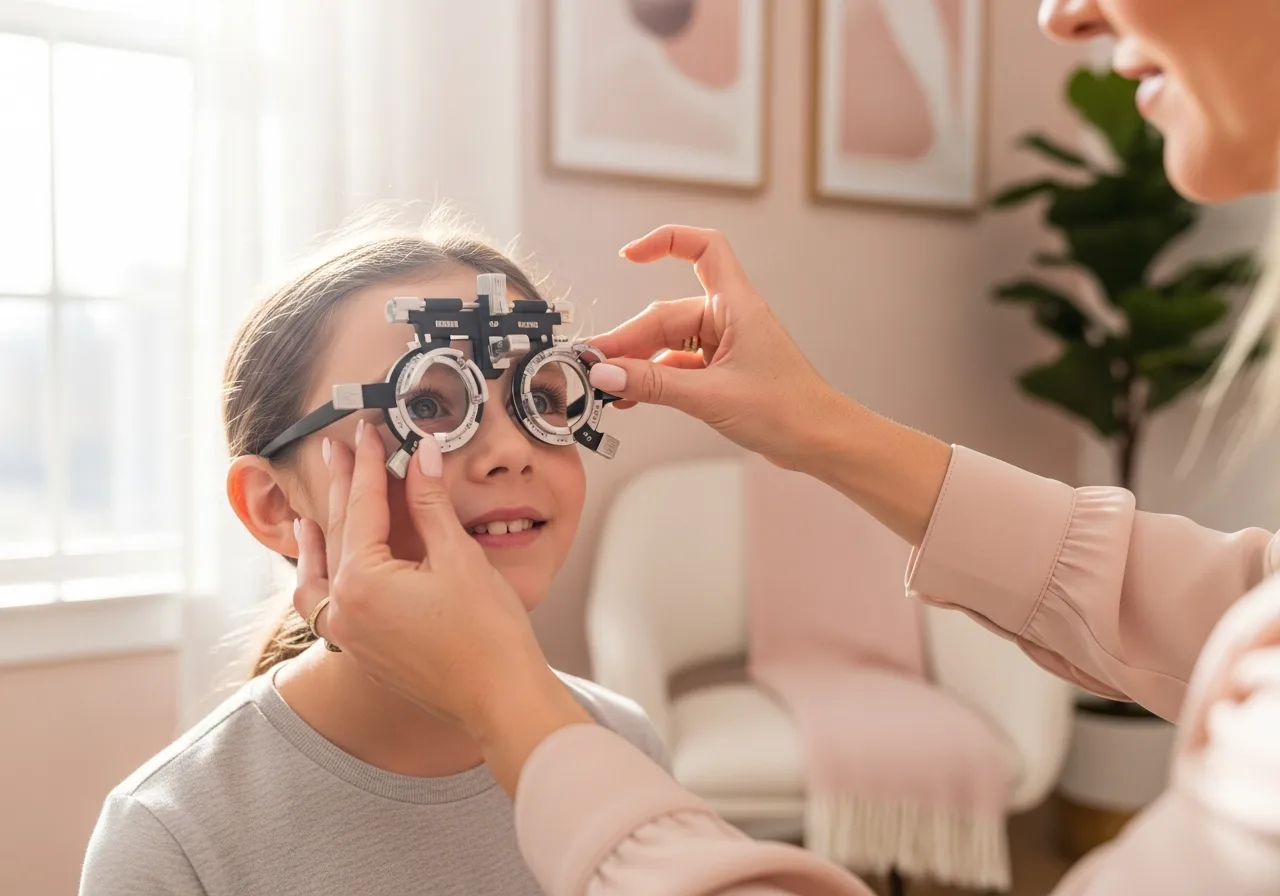
Myopia management is an ongoing partnership rather than a one-time fix. It begins with a comprehensive eye exam to confirm the diagnosis and measure how the eyes are changing. From there, we recommend the treatment - or combination of treatments - best suited to your child, and we monitor progress with regular follow-up visits. Over time, we adjust the plan as your child grows.
The goal is simple: keep your child seeing clearly today while protecting their eyes for decades to come.
Schedule Your Child's Myopia Evaluation in Burbank
If your child is squinting, sitting close to screens, or has a prescription that keeps climbing, early action makes a difference. The sooner myopia management begins, the more progression we can prevent. Contact Toluca Lake Optometric Center in Burbank, CA to schedule a comprehensive eye exam and find out which myopia management options are right for your child.