Dry eye care has expanded significantly in the past decade. Where the options were once limited to artificial tears and warm compresses, there are now multiple in-office treatments that target the underlying drivers of the disease. One of the more recent additions — and one that many patients have not yet heard of — is low-level light therapy, or photobiomodulation (PBM).
At Toluca Lake Optometric Center in Burbank, CA, we offer photobiomodulation as part of our advanced dry eye treatment offerings, often alongside IPL for patients who need a more comprehensive approach.
What Is Photobiomodulation?
Photobiomodulation uses near-infrared and red wavelengths of light — delivered at low, non-thermal levels — to stimulate cellular function in the target tissue. Unlike IPL, which generates heat that closes blood vessels and softens gland secretions, PBM works through a non-thermal photochemical mechanism.
The light is absorbed by chromophores inside the mitochondria — specifically cytochrome c oxidase, a protein in the electron transport chain. This absorption triggers a cascade of cellular responses: improved mitochondrial efficiency, increased ATP (cellular energy) production, reduced oxidative stress, and modulation of inflammatory signaling.
In practical terms: PBM wakes up struggling cells, reduces their inflammatory output, and helps them function more normally. It has been studied and applied in wound healing, pain management, neurological conditions, and oral health — and more recently, with significant evidence accumulating, in the treatment of dry eye disease.
How PBM Helps Dry Eye Specifically
The meibomian glands — the oil-producing glands in the eyelids that are central to most evaporative dry eye — are metabolically active structures that depend on healthy cellular function to produce consistent, high-quality secretions. When they are chronically inflamed, stressed by blepharitis, or compromised by meibomian gland dysfunction, their cellular machinery underperforms.
PBM supports meibomian gland health through several pathways:
Reducing eyelid inflammation. By modulating the inflammatory signaling within eyelid tissue, PBM decreases the chronic inflammatory burden on the meibomian glands. Less inflammation means healthier gland function.
Improving cellular energy in gland cells. The glandular cells that produce meibum require significant energy. PBM's effect on mitochondrial function helps these cells produce and secrete more effectively.
Reducing oxidative stress. Oxidative damage to the meibomian gland tissue is a known contributor to gland atrophy and dysfunction. PBM's antioxidant effects at the cellular level help protect the gland tissue.
Supporting the ocular surface. Beyond the lids, PBM has been shown to reduce inflammation on the conjunctival surface and improve the comfort of the ocular surface in patients with chronic dryness and irritation.
PBM vs. IPL: Different Tools for Different Mechanisms
A common question is how PBM differs from IPL and whether one replaces the other. They are complementary, not interchangeable:
IPL works through vascular targeting and photothermal effects. It closes abnormal blood vessels carrying inflammatory mediators, and generates heat that softens gland secretions. It is particularly effective for patients with rosacea-associated lid disease, significant vascular inflammation, and meibomian gland secretion quality issues.
PBM works through non-thermal photochemical stimulation of cellular metabolism. It reduces inflammation at a cellular level, supports mitochondrial function, and helps heal tissue that has been damaged by chronic disease. It is particularly valuable for patients with stubborn meibomian gland dysfunction, nerve-related components to their dry eye, or ocular surface inflammation that has not fully responded to IPL.
Many patients with moderate to severe dry eye benefit from both — IPL to address the vascular and secretion components, PBM to support cellular recovery and reduce ongoing inflammation.
The Treatment Experience
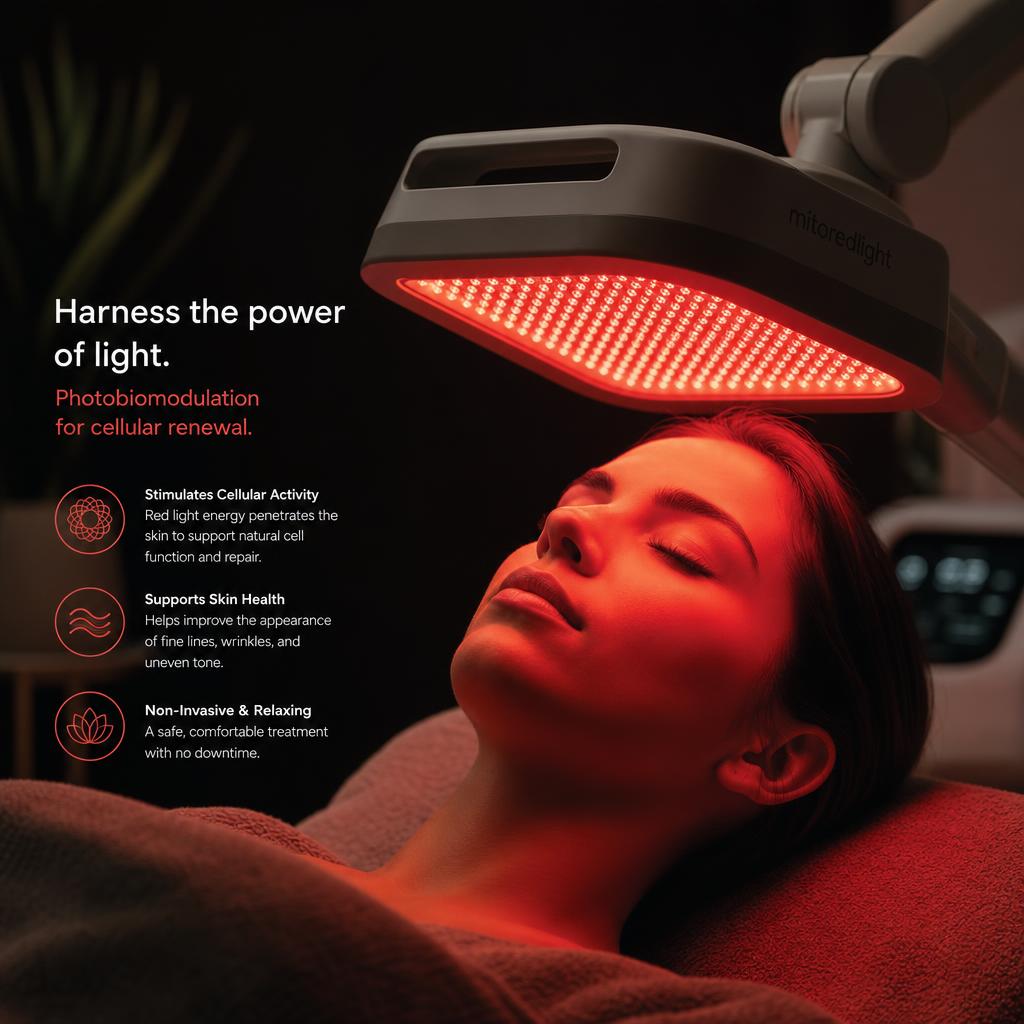
PBM treatments are gentle and comfortable. Low-level red and near-infrared light is delivered to the closed eyelids through a specialized device. There is no heat sensation, no discomfort, and no recovery time. Sessions typically take 10 to 15 minutes. Because the effect is cumulative, most patients complete a series of sessions before assessing results.
Side effects are minimal to none. PBM is safe for almost all patients and does not have the skin tone contraindications associated with IPL.
Who Benefits Most from PBM for Dry Eye?
PBM is particularly well-suited for:
- Patients whose dry eye has a significant inflammatory component that has not fully resolved with other treatments
- Patients with meibomian gland dysfunction who have not achieved adequate relief from IPL alone
- Patients with neuropathic components to their dry eye, where nerve health and signal processing are involved
- Patients who are not candidates for IPL due to skin type or other contraindications
- Patients seeking a comprehensive, multi-modal approach to dry eye management
If you have been told your dry eye is complex, or if you have been through other treatments without reaching a satisfactory level of comfort, photobiomodulation may be the piece missing from your treatment plan.
Call Toluca Lake Optometric Center in Burbank at (818) 841-1212 to schedule a dry eye evaluation and learn whether PBM belongs in your care plan.